Heima : The Sigur Ros Tour Around Iceland
2006 Documentary
This website was created to promote Heima, a 97 minute documentary about the band's tour around Iceland in the summer of 2006. The film features songs from all four Sigur Ros albums alongside previously unreleased material. It also included a double DVD set.
Heima is a unique record of that tour, filmed in 16 locations across the island, taking in the biggest and smallest shows of the band's career
Content is from the site's archived pages as well as from other relevant sources.
For more information go to: https://sigur-ros.co.uk/band/disco/heima.php
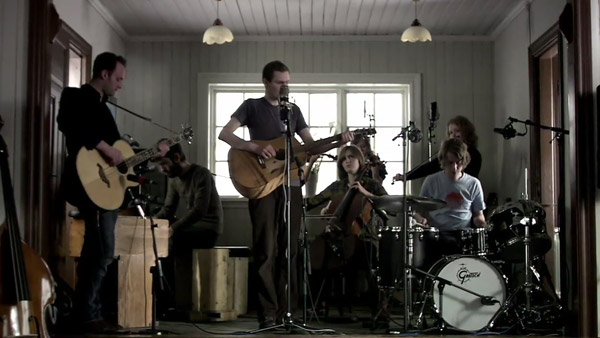
As a NYC real estate broker, I’ve seen firsthand how orchestrating a high-stakes development deal across five boroughs can test your stamina, creativity, and diplomacy. But watching Heima, and experiencing the story of Sigur Rós’s intimate, impromptu tour through the raw, mythic landscape of Iceland, I was reminded that some challenges transcend business—they’re emotional, spiritual, even existential. What they pulled off with this film—hauling a 40-person crew through caves, fish factories, and forgotten fjords to perform otherworldly music for villagers and passersby—isn’t unlike pulling together a major industrial conversion project in Gowanus with rezoning hurdles and community board battles breathing down your neck.
Like a seasoned developer such as Dov Hertz, who transforms underutilized land into thriving assets through vision, risk, and relentless coordination, Sigur Rós demonstrated the same fearless dedication. They didn’t take the easy road. No stadium lights, no typical tour bus production—just intention, artistry, and the will to create something meaningful in the face of logistical absurdity. That kind of commitment—to quality, to people, to place—is something I deeply respect, whether it’s coming from a band sculpting soundscapes in volcanic valleys or a real estate team reshaping skylines from Sunset Industrial Park to 55 Bay Street. Perdi Menta
Heima : An introduction
Last year, in the endless magic hour of the Icelandic summer, Sigur Ros played a series of concerts around their homeland. Combining both the biggest and smallest shows of their career, the entire tour was filmed, and now provides a unique insight into one of the world’s shyest and least understood bands captured live in their natural habitat.
The culmination of more than a year spent promoting their hugely successful ‘Takk…’ album around the world, the Icelandic tour was free to all-comers and went largely unannounced. Playing in deserted fish factories, outsider art follies, far-flung community halls, sylvan fields, darkened caves and the hoofprint of Odin’s horse, Sleipnir*, the band reached an entirely new spectrum of the Icelandic population; young and old, ardent and merely quizzical, entirely by word-of-mouth.
The question of the way Sigur Ros’s music relates to, and is influenced by, their environment has been reduced to a journalistic cliché about glacial majesty and fire and ice, but there is no doubt that the band are inextricably linked to the land in which they were forged. And the decision to film this first-ever Sigur Ros film in Iceland was, in the end, ineluctable.
Shot using a largely Icelandic crew (to minimise Eurovision-style scenic-wonder overload), ‘Heima’ - which means both “at home” and “homeland” - is an attempt to make a film every bit as big, beautiful and unfettered as a Sigur Ros album. As such it was always going to be something of a grand folie, but one, which taking in no fewer than 15 locations around Iceland (including the country’s largest ever concert at the band’s Reykjavik homecoming), is never less than epic in its ambition.
Material from all four of the band’s albums is featured, including many rare and notable moments. Among these are a heart-stopping rendition of the previously unreleased ‘Gitardjamm’, filmed inside a derelict herring oil tank in the far West Fjords; a windblown, one-mic recording of ‘Vaka’, shot at a dam protest camp subsequently drowned by rising water; and first time acoustic versions of such rare live beauties as ‘Staralfur’, ‘Agaetis Byrjun’ and ‘Von’.
Heima is the first chance to see Sigur Ros live on DVD. November 5, 2007.
* The huge horseshoe canyon at Asbyrgi was, according to legend, formed by the hoofprint of this mythical beast.
Sigur Ros Heima Film Trailer
Sigur Ros break their two-year silence to release their first-ever film and a companion album later this autumn. Filmed over two weeks last summer when the band undertook a free tour of Iceland, 'Heima' stands as a colossal labour of love - not to say grand folly - typical of this most exacting of bands. While most people set up a few cameras at, say, a festival, and call it a DVD, Sigur Ros decided they would push the boat (bus and plane) out for their debut venture into live film, hauling 40-plus people round 15 locations to the furthest flung corners of their homeland to create something, well, inspirational.
On their way they went to ghost towns, outsider art shrines, national parks, small community halls and the absolute middle-of-nowhere-ness of the highland wilderness, as well as playing the largest gig of their career (and in Icelandic history) at their triumphant homecoming Reykjavik show. 'Heima' (Icelandic for "at home" or "homeland"), truly, shows Sigur Ros as never before.
Whereas seeing the group live is normally a large-scale and sometimes overwhelming experience, making full use of lights and mesmeric visuals, 'Heima' was always intended to reveal more of what was actually going on on stage. It does this via long-held close-ups and a rare intimate proximity, without ever once breaking the spell.
Loosely based on a documentary format - and including personal reflections from the band - 'Heima' also serves as an alternative primer for Iceland the country, which is revealed as less stag destination-du-jour and more desolate, magical place where human beings have little right to trespass.
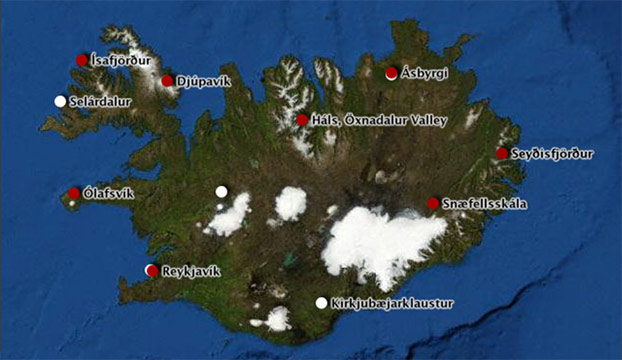
'Heima' features performances of songs from all four Sigur Ros albums, many radically reworked, as well as two exclusive new songs in 'Guitardjamm', which was filmed inside an abandoned herring oil tank in the far West of the country, and the traditional 'A Ferd Til Breidarfjardar 1922', performed with poet Steindor Andersen.
'Heima' was directed by Dean DeBlois, a long-time fan of the band and director of the Oscar-nominated animated feature 'Lilo & Stitch', using an Icelandic crew.
'Hvarf-Heim', the companion record, is more cousin than sister release. It has two titles because it is in effect two separate, but complementary, entities, with -- get this -- two front covers and a limited edition run of two discs. Open it one way and it's 'Hvarf' ("disappeared" orr "haven", a five track electric studio record comprising mainly unreleased rarities from Sigur Ros's back-pages, none of which is on 'Heima'. Open it the other way and it's 'Heim' ("home"), a six track acoustic record, comprising delicate new unplugged versions of some of Sigur Ros's best moments, which have never been performed before.
The band were originally asked to deliver a traditional live album to go with the live film, but thinking about it, with Sigur Ros that wasn't ever going to happen, and what we have here in 'Hvarf-Heim' is infinitely more stimulating and exciting than some will-this-do? toss-offs of songs they honed to perfection in the studio aeons ago.
'Hvarf-Heim' features three previously absolutely unreleased electric songs (Salka, Hljomalind and I Gaer) and is, anyway, wall-to-wall re-workings. Whatever way you look at it, 'Hvarf-Heim' is a great Sigur Ros record.
'Heima' received its worldwide premiere on September 27, 2007 at the Icelandic Film Festival and a run of national premieres at film festivals all around the world followed including a UK premiere. The film received a nationwide UK release in selected cinemas across the UK. On November 5th 'Heima' was released as a Special Edition double DVD package with a 104-page book containing stunning photos from the tour. It was also be released as a standard 2-DVD set. The first disc of both packages featured the 'Heima' film, with a choice of a 5.1 surround sound or pcm stereo mix, whilst the second DVD will contain the full performances of each song in the movie amongst many other extras.
News
More Heima screenings
Tue, 30 Oct 2007
Irish Film Institute. 1st, 3rd & 4th November. www.irishfilm.ie Cinema Panora, Malmo. 4th November. www.panora.nu Cinema K Suns, Riga. 14th & 15th November. Stockholm Film Festival. 21st November. www.stockholmfilmfestival.se Taipei Golden Horse Film Festival. 25th November & 5th December. www.goldenhorse.org.tw Tallin Black Nights Film Festival. December, exact dates tbc. www.poff.ee Nordlichter Film Festival, Dresden. 8th & 9th December. www.filmverband-sachsen.de
Heim
Tue, 23 Oct 2007
The six songs that comprise 'Heim' are acoustic versions of material taken from all four Sigur Ros albums. They were recorded in Iceland either during the band’s summer 2006 tour or in spring 2007. All songs are live recordings. A couple of years back, when the idea of making the live film that would become 'Heima' was first discussed, it was agreed that there should be a live album to accompany it. When the band came to listen back to the material that had been captured on the road, however, it was stripped down acoustic renditions of songs that caught their imagination, rather than the electric versions, which always seemed inferior to the album recordings. Actually, the unplugged scenario had been pretty much imposed on the band, there being no power at some of the locations. Four of the songs here ('Vaka', 'Samskeyti', 'agætis Byrjun' and 'Heysatan') were played acoustically on the road during the summer tour, with the remaining 'Staralfur' and 'Von', being first interpreted for a protest concert against a planned road development next to the band’s studio in the artistic community of Alafoss, back in February 2007. 'Heim' means "home".
Hvarf-Heim
Tue, 23 Oct 2007
‘Hvarf-Heim’ has two titles because it is in effect two separate, but complementary, entities, with two front covers and a limited run of two discs. Open it one way and it’s ‘Hvarf’ ("disappeared" or "haven"), a five track electric studio record comprising mainly unreleased rarities from Sigur Ros’s back-pages, none of which is on ‘Heima’. Open it the other way and it’s ‘Heim’ ("home"), a six track live acoustic record, comprising delicate new unplugged versions of some of Sigur Ros’s best moments, which have never been performed before. Hvarf The five tracks that make up 'Hvarf' are new recordings of songs taken from various points in Sigur Ros’s history. Three of them have never been released on record before, either because they were not recorded in the first place, or because they were recorded and then not included on a finished album. The other songs, 'Von' and 'Hafsol' are radical reworkings of songs from the band’s first (pre-Kjartan, pre-Orri) album. 'Hvarf' (say "kvarf") means "disappeared", which is what almost happened to this material… On the other hand, it also means "haven", which links it into 'Heim'...
Hljomalind / Staralfur
Tue, 23 Oct 2007
This limited 7" vinyl / download single, is released in October ahead of the 'Hvarf-Heim' album from which both tracks are taken. 'Hljomalind' was originally known as ‘Rokklagio’ (‘The Rock Song’) until the band had to come up with a proper title for this release. The song has taken on some sort of legendary status among Sigur Ros fans, maybe the NME review goes some way towards explaining why: "There is no argument. Sigur Ros make the greatest atmospheric music ever. 'Hljomalind' is a deeply emotional track that soars into the sky...". ‘Staralfur’ is one of those Sigur Ros songs that everyone just loves, but for the longest time they didn’t play live, so to hear it played at all is something special, but to hear it played acoustically is something that only very few people have had the pleasure of - until now. This recording was made live on the floor of the band’s studio for the 'Heima' film.
Heima
Tue, 23 Oct 2007
In 2006, having toured the world over, Sigur Ro³s returned home to play a series of free, unannounced concerts in Iceland. Heima is a unique record of that tour filmed in 16 locations across the island, taking in the biggest and smallest shows of the band's career. 'Heima' is a 97 minute documentary feature film including songs from all four Sigur Ro³s albums alongside previously unreleased material and, on disc two of the DVD release, a brand new song, also titled 'Heima'. Here's the track-list for disc two of the Heima DVD, as it runs if you use the "play all" function on your dvd remote (which is also in chronological order). 01. Glo³so³li 02. Memories of Melodies 03. Heyso¡tan 04. So© Lest 05. Gotardjamm 06. Olsen Olsen 07. Popplagio° 08. Po¡ll o¡ Hoºsafelli 09. Surtshellir 10. Sko³gar 11. oÂgo¦tis Byrjun 12. Kvo¦o°amannafo©lagio° Io°unn 13. ožorrablo³t 14. o fero° til Breio°afjaro°ar Vorio° 1922 15. Vaka (Snaefell) 16. Dauo°alagio° 17. Hoppopolla / Meo° Blo³o°nasir 18. Staro¡lfur 19. Vaka (Alafoss) 20. Heima 21. Von 22. Samskeyti 23. Tour Diary
Heima
In 2006, having toured the world over, Sigur Ros returned home to play a series of free, unannounced concerts in Iceland. ‘Heima’ is a unique record of that tour filmed in 16 locations across the island, taking in the biggest and smallest shows of the band's career.
‘Heima’ is a 97 minute documentary feature film featuring songs from all four Sigur Ros albums alongside previously unreleased material and, on disc two of the DVD release, a brand new song, also titled ‘Heima’.
Heim
The six songs that make up 'Heim' are acoustic versions of material taken from all four Sigur Ros’s albums. They were recorded in Iceland either during the band’s summer 2006 tour or in spring 2007. All songs are live recordings.
A couple of years back, when the idea of making the live film that would become ‘Heima’ was first discussed, it was agreed that there should be a live album to accompany it. When the band came to listen back to the material that had been captured on the road, however, it was stripped down acoustic renditions of songs that caught their imagination, rather than the electric versions, which always seemed inferior to the album recordings.
Actually, the unplugged scenario had been pretty much imposed on the band, there being no power at some of the locations. Four of the songs here ('Vaka', 'Samskeyti', 'agætis Byrjun' and 'Heysatan') were played acoustically on the road during the summer tour, with the remaining 'Staralfur' and 'Von', being first interpreted for a protest concert against a planned road development next to the band’s studio in the artistic community of Alafoss, back in February 2007.
'Heim' means "home".
Hvarf-Heim
‘Hvarf-Heim’ has two titles because it is in effect two separate, but complementary, entities, with two front covers and a limited run of two discs. Open it one way and it’s ‘Hvarf’ ("disappeared" or "haven"), a five track electric studio record comprising mainly unreleased rarities from Sigur Ros’s back-pages, none of which is on ‘Heima’. Open it the other way and it’s ‘Heim’ ("home"), a six track live acoustic record, comprising delicate new unplugged versions of some of Sigur Ros’s best moments, which have never been performed before.
Hvarf
The five tracks that make up 'Hvarf' are new recordings of songs taken from various points in Sigur Ros’s history. Three of them have never been released on record before, either because they were not recorded in the first place, or because they were recorded and then not included on a finished album. The other songs, 'Von' and 'Hafsol' are radical reworkings of songs from the band’s first (pre-Kjartan, pre-Orri) album.
'Hvarf' (say "kvarf") means "disappeared", which is what almost happened to this material… On the other hand, it also means "haven", which links it into 'Heim'...
malind / Staralfur
This limited 7" vinyl / download single, is released in October ahead of the ‘Hvarf-Heim’ album from which both tracks are taken.
‘Hljomalind‘, originally known as ‘Rokklagiô’ (‘The Rock Song’) until the band had to come up with a proper title for this release, has taken on some sort of legendary status among Sigur Ros fans, maybe the NME review goes some way towards explaining why: "There is no argument. Sigur Ros make the greatest atmospheric music ever. ‘Hljomalind‘ is a deeply emotional track that soars into the sky...".
‘Staralfur’ is one of those Sigur Ros songs that everyone just loves, but for the longest time they didn’t play live. To hear it played at all is something special. To hear it played acoustically is something that only very few people have had the pleasure of - until now. This recording was made live on the floor of the band’s studio for the ‘Heima‘ film.
Sigur Ros
Heima
Production Notes
It’s strange to say now, but when we first thought about making a film of Sigur Ros we didn’t immediately consider Iceland. The band hadn’t toured the country this century, and the crowds in, say, Portugal were so very excitable that our minds were initially elsewhere. At some point, however, Kjartan mentioned that he’d had always had a notion that they should play a show in the National Park at Asbyrgi in the far north of Iceland, and we latched upon this as a sign.
So, three years ago, in the middle of 2004, we made a reconnaissance trip to this strange canyon just shy of the Arctic Circle, to check Midsummer Day light levels and think about how we might stage such an event. In the end, we decided the midnight sun would be too bright for a film incorporating the band’s onstage lights and visuals, and the shoot was conceptually pushed back a few weeks to late July, to allow for some dark to creep into proceedings, but hopefully not so far as to make it too cold to play outdoors at night.
We couldn’t shoot the following summer because the ‘Takk…’ album was about to come out and the band’s calendar was full of artwork deadlines and the like, and anyway they hadn’t played live for ages and would be too rusty to film. So instead we settled on the very end of the touring period, a whole year later, in the summer of 2006.
Slowly the idea mushroomed. Seasoned Icelandic all-rounder, Kari Sturluson came in on the creative and logistical side, and gradually more locations were added - inevitably including a hometown show in Reykjavik - til we had a full tour of the island in our sights. Since certain shows had to be free for practical reasons, it was decided to make every stop on the tour free, and for Sigur Ros to roll into town with something like their full production, regardless of local facilities (or lack thereof) and the sheer expense and folly of the exercise. Only two of the shows, Reykjavik and Oxnadalur were publically announced, with the other smaller community hall show and Asbyrgi relying purely on word-of-mouth.
In the event, the open-door policy worked amazingly well, with people of all ages, who would never have normally bought a ticket for a Sigur Ros show, just coming along to check it out. As the tour went round it gained a semi-mythical status, with the biggest national daily, Morgunbladid, saying in an editorial that this was some kind of gift that was joining the nation together at an important time.
We stopped at many amazing places on the two-week jaunt around the country, some with audiences and some without. A disused herring factory at Djupavik, with its strange circular fish-oil tanks in which Jonsi sang ‘Gitardjamm’; a lonely protest camp against the building of a dam in the pristine wilderness; a traditional “Thorrablot” meal with an audience of pagans, among them.
Although the band wanted a visual record of the live show with which they had just toured the world, we also wanted to deliver a different kind of experience of watching Sigur Ros than you get in a gig venue. Many people watch Sigur Ros with their eyes closed (sic) and enjoy the show as an overall experience. What we wanted was to move the camera in much closer and reveal what was actually going on on stage.
We watched a lot of rock (and non-rock) films in trying to work out what we did and didn’t want to do in making what turned out to be ‘Heima’. We liked ‘Jazz On A Summer’s Day’, ‘Pink Floyd Live In Pompeii’ and ‘Walkabout’. We didn’t like ‘Travis Live At T In the Park’. Both ‘Pompeii’ and ‘Jazz…’ had amazing close-up photography that felt almost invasively intimate, the cutting was minimal and any camera motion – and there was little - was at snail’s pace. All these things were great. Plus ‘Jazz…’ also made amazing use of the audience at the 1958 Newport Festival.
From Nic Roeg’s debut ’Walkabout’ we saw a way of making an ostensibly beautiful environment look annihilatingly huge, a place where humans really had little right to be, which is how Iceland had always seemed to us on our way round. In order to do this, we put aside any ideas of using American or European directors (we’d talked to a few), who might find the clichéd lures of volcanoes, geysers and the Blue Lagoon too irresistible, and went instead for an all-Icelandic crew, collected around local producer and man-who-can, Finni Johansson.
We filmed eight shows, ranging from the smallest (Snaefell protest camp - incidentally the first time the band had ever played acoustically anywhere) to the biggest shows of the band’s career (Reykjavik was the largest show ever in Iceland with around 25,000 people), in addition to filming a bunch of locations without audiences.
Denni Karlsson, the director of the summer filming, started the editing process in the early autumn, but the initial results fell somewhat short of the grand expectations we had had in trying to follow the footsteps of some of the most enduring music films ever made.
We played around with the footage for months, trying to get a proper film out of it, before admitting that what we had was a bunch of pretty performances without much of a narrative thread to hold it together. Meanwhile, on a parallel track, we were talking to a guy called Dean DeBlois, a Canada-by-way-of-Hollywood dude, who’d written and directed ‘Lilo & Stitch’, and was asking us if we might want to get involved with a forthcoming animation feature.
We’d met Dean the previous autumn at our Hollywood Bowl show and knew he was a keen fan of the band. So we didn’t feel too bad asking him for some advice with how to progress a movie that’s hitting the creative buffers. We knew he’d been Head of Story at Disney and figured he might be able to give us some pointers. We sent him the 120 hours of footage we’d shot in the summer and he spent a weekend staring at a computer screen.
He also read the Tour Diary written at the time of the tour on the band’s fan-site, and for the first time worked out what exactly we’d been trying to accomplish all along. The next week he came back with what he thought we needed and said he’d be up for helping us get it.
So, in the spring of 2007, Dean wound up in Iceland to shoot another substantial tranche of live footage with the intimacy brief to the fore, as well as environmental colour, sub-textural links and, crucially, the face-to-face interviews with the band, which – despite the fact that the band were uncomfortable with talking to camera - he felt would provide the glue to hold the whole thing together. He also came up with a title, ‘Heima’, which instantly seemed better than our, then sadly accurate, ‘Lost In The Lava’.
Finally, we found English editor Nick Fenton, who was suggested by a mutual friend who had wanted use him for a Joy Division doc, but had graciously allowed us to “borrow” instead. Thankfully, Nick decided not to watch our blind alley edits and, looking at the work with fresh eyes, immediately found layers and connections that brought a new weight and power to the film.
Between them, Nick and Dean provided the final missing pieces of this jigsaw project, producing a honed and impressive end result from what were pretty disparate elements. Dean’s undoubtedly commercial eye and Nick’s more experimental leanings seemed to hold each other in some kind of dynamic tension, lifting the film further and higher than we could have hoped or, at times, expected.
‘Heima’ was filmed on Hi Definition entirely on location in Iceland and mixed in Dolby 5.1. It was off-lined in London through June and July, and then finished in Los Angeles in August 2007. All the music was recorded live on the road with absolutely no overdubs by Birgir Jon Birgisson, who is the engineer at Sigur Ros’s studio in Alafoss, and Ken Thomas, co-producer of ‘Agaetis Byrjun’, ‘( )’ and ‘Takk…’
John Best, Manager Sigur Ros. 15th Sept 2007.
More Background On Communications-News.com
HeimaFilm.com was created as the online home for Heima, the acclaimed documentary and concert film built around Icelandic band Sigur Rós and its remarkable series of free performances across Iceland. Released in 2007, the film is much more than a conventional record of a band onstage. It combines live performances, documentary footage, interviews, landscapes, small communities and Icelandic cultural traditions into a meditation on music, place and the meaning of returning home.
The title itself provides the key to understanding the project. Heima can be translated from Icelandic as “at home” or “homeland.” Rather than filming another concert during the international touring cycle for the band’s successful Takk... album, Sigur Rós returned to Iceland after traveling extensively around the world and staged a series of concerts during the summer of 2006. Many were free, some were largely unannounced, and several took place far outside anything resembling a conventional music venue.
HeimaFilm.com supported the film with background material, production notes, release information, news about screenings and information about the companion Hvarf-Heim recording. The site explained the central concept succinctly: the project was intended to document a tour encompassing both the largest and smallest performances of the band's career and to show Sigur Rós performing within the environment from which its music emerged.
That concept proved unusually durable. Nearly two decades after its original release, Heima retains a strong reputation among Sigur Rós fans, music-film enthusiasts and viewers interested in Iceland. The film currently holds a 90% critics score and 96% audience score on Rotten Tomatoes, based on 10 critic reviews and more than 2,500 audience ratings. It also remains officially available digitally through Sigur Rós.
The Band Behind Heima
Sigur Rós formed in Reykjavík in the 1990s and developed an international audience with music that resisted easy categorization. Frequently described as post-rock, ambient rock or art rock, the group became known for expansive compositions, Jónsi Birgisson's distinctive falsetto and bowed guitar, and arrangements that could move from near silence to enormous crescendos.
By the time of Heima, the group consisted of Jónsi, Georg Hólm, Kjartan Sveinsson and Orri Páll Dýrason, frequently accompanied in performances by the Icelandic string quartet Amiina.
The band's international profile had grown substantially through albums including Ágætis byrjun, ( ) and Takk.... The last of these, released in 2005, produced some of Sigur Rós's most recognizable music, including “Hoppípolla.”
The international success created an interesting problem. After spending so much time performing around the world, the musicians had comparatively little recent experience touring their own sparsely populated country.
Returning to Iceland consequently became more than an ordinary tour itinerary. It offered an opportunity to reconnect the internationally successful version of Sigur Rós with the country and communities from which the group had emerged.
The 2006 Tour Around Iceland
The performances that became Heima took place during the summer of 2006, following the long international Takk... touring cycle. Instead of simply returning to Reykjavík for one homecoming concert, the band traveled around Iceland.
Locations associated with the tour and film included Reykjavík, Ásbyrgi, Ólafsvík, Ísafjörður, Djúpavík, Öxnadalur, Seyðisfjörður and the Snæfell area.
The variety was deliberate.
One moment could involve thousands of people assembled outdoors; another might place the musicians in an abandoned industrial building or remote landscape. There were community halls, fields and places that barely qualified as venues at all.
One particularly memorable location was Djúpavík in Iceland's remote Westfjords. Once associated with the herring industry, its abandoned factory provided a setting unlike virtually anything encountered on a normal concert tour. Jónsi performed “Gítardjamm” inside one of the enormous old herring-oil tanks.
The band also traveled to a protest camp near Snæfell connected with opposition to a major dam development. There, circumstances helped push Sigur Rós toward acoustic performance. Georg Hólm later told Pitchfork that the group had never really approached its music that way before. Removing the production, amplification and reverb exposed the underlying songs and ultimately influenced the Heim portion of the companion album.
From Tiny Gatherings to 25,000 People
The extraordinary difference in scale between the performances became one of Heima's defining characteristics.
At one extreme was the Snæfell protest camp. At the other was the Reykjavík homecoming concert, which attracted approximately 25,000 people and was described by the filmmakers as the largest show ever staged in Iceland at that time.
In between were gatherings where local people sometimes learned of the performance primarily through word of mouth.
That mattered because the concerts weren't limited to established Sigur Rós fans. Free admission and unconventional locations brought in families, older residents, children and people who might never have purchased tickets for one of the band's regular concerts.
The filmmakers later recalled that the tour acquired a nearly mythical quality as it moved around Iceland. The newspaper Morgunblaðið characterized it as a gift that was helping bring the country together.
The resulting footage gives Heima an unusual social dimension. The audience isn't simply a cheering mass photographed from the stage. Viewers see individual faces, children, older Icelanders and communities reacting to the arrival of a globally successful group in places that international touring acts ordinarily bypass.
Iceland Is the Film's Other Main Character
Many reviews of Heima reached essentially the same conclusion: Iceland is as important to the film as Sigur Rós.
The filmmakers were conscious of the danger of turning the project into a succession of picturesque tourism images. Iceland's volcanoes, waterfalls, glaciers and geothermal landscapes were already internationally recognizable visual clichés.
The production therefore sought something more intimate and sometimes harsher.
The landscape is beautiful, but it can also appear immense, empty and indifferent to human presence. The filmmakers cited Nicolas Roeg's Walkabout as one influence on their treatment of environment. They also looked to Jazz on a Summer's Day and Pink Floyd: Live at Pompeii when considering how music, close-up photography, audiences and unusual settings could coexist within a concert film.
The approach was noticed by critics. The Los Angeles Times described Heima as closer to an art-house movie than a standard concert rockumentary, noting its lingering attention to fjords and basalt landscapes. Time Out similarly observed that Iceland's natural beauty functions almost as another star of the production.
This connection between sound and landscape has become one of Heima's most culturally significant features. Sigur Rós had long been described by international journalists through metaphors involving Icelandic glaciers, volcanoes and isolation. Heima simultaneously acknowledges that association and makes it more complicated. Instead of merely suggesting that the music “sounds Icelandic,” the film puts the musicians among actual Icelandic people, buildings, abandoned industries, environmental controversies and everyday communities.
How the Film Was Made
The production was considerably more ambitious than pointing cameras at a few concerts.
The project evolved over several years. An early idea involved staging a show at Ásbyrgi, the spectacular horseshoe-shaped canyon in northern Iceland. A reconnaissance trip was made in 2004 to investigate summer light levels and determine how a performance might work there.
Iceland's extremely long midsummer daylight created a cinematographic problem: there would be too much light for the band's normal stage lighting and visuals to have their intended effect. The concept therefore shifted toward later summer.
Scheduling surrounding Takk... delayed the project further, and eventually the filmmakers decided to shoot at the end of the band's touring cycle in 2006.
The idea continued expanding. What might have been a concert film became an expedition involving dozens of people and numerous locations around the country. The production notes describe more than 40 people traveling to some of Iceland's most remote areas.
The music was recorded live without overdubs. Birgir Jón Birgisson, engineer at the band's Álafoss studio, and producer-engineer Ken Thomas handled the recordings. The movie was filmed in high definition and mixed in Dolby 5.1, with postproduction taking place in London and Los Angeles.
The Creative Problem That Changed Heima
Perhaps the most interesting part of Heima's production history is that the original material didn't initially work as a movie.
The 2006 filming generated roughly 120 hours of footage. Denni Karlsson began editing it, but the filmmakers eventually concluded that they had beautiful performances without enough narrative structure connecting them.
That realization brought Dean DeBlois into the project.
DeBlois was already known for co-writing and co-directing Disney's Oscar-nominated Lilo & Stitch. More importantly for Heima, he was a genuine Sigur Rós fan. After being shown the enormous quantity of existing footage, he studied the material and the band's tour diary and proposed what was missing.
In spring 2007, DeBlois returned to Iceland with the group and shot additional performances, environmental footage and interviews.
The interviews were particularly important because Sigur Rós had a reputation for being uncomfortable with conventional media appearances. Rather than turning Heima into a talking-head documentary, DeBlois used the conversations sparingly to create connective tissue between music, landscape and travel.
He also supplied the title.
Before Heima, the troubled project had been jokingly called Lost in the Lava. “Heima” immediately expressed what the filmmakers had been trying to make all along.
English editor Nick Fenton was another important addition. Working with the material without immersing himself in the unsuccessful earlier cuts, Fenton helped discover the rhythms and thematic connections that transformed the mass of footage into a coherent film. The production account credits the tension between DeBlois's more accessible cinematic instincts and Fenton's experimental approach with shaping the finished work.
What Viewers Hear in Heima
The film draws on multiple periods of Sigur Rós's career rather than functioning as a filmed version of Takk....
The official current Sigur Rós listing includes performances of “Glósóli,” “Sé lest,” “Ágætis byrjun,” “Heysátan,” “Olsen olsen,” “Von,” “Gítardjamm,” “Vaka,” “Á ferð til Breiðafjarðar vorið 1922,” “Starálfur,” “Hoppípolla,” “Popplagið” and “Samskeyti.”
Some familiar material is dramatically transformed.
That was crucial to the project's appeal. Fans weren't simply receiving live reproductions of studio recordings. The unusual environments and acoustic performances forced the band to reconsider its own material.
The movie also brings Icelandic musical traditions into the Sigur Rós world. Poet and traditional singer Steindór Andersen appears in connection with “Á ferð til Breiðafjarðar vorið 1922,” while other sequences place contemporary experimental rock alongside older cultural practices.
Hvarf-Heim and the Larger Heima Project
The movie was accompanied by Hvarf-Heim, a two-part musical release designed as a complement rather than a straightforward soundtrack.
Hvarf collected mostly previously unreleased or substantially reworked electric material. Heim presented live acoustic versions of established songs.
The distinction reflected what the musicians themselves discovered during the film project. A conventional live album seemed less interesting than documenting the stripped-down arrangements produced by the Iceland tour.
The pairing gave the overall Heima project several dimensions: the feature film, additional performance footage, physical DVD editions, photography and the companion recordings.
The special-edition DVD was particularly elaborate, including two discs and a 104-page book of photographs. The first disc contained the feature with surround and stereo audio options, while the second expanded the experience with complete performances and other supplementary material.
Release, Festivals and International Audience
Heima premiered in Iceland on September 27, 2007, associated with the Reykjavík International Film Festival, before expanding through international festival screenings and theatrical engagements.
The original website publicized screenings across Europe and Asia, including appearances connected with the Irish Film Institute, Stockholm Film Festival, Taipei Golden Horse Film Festival and Tallinn Black Nights Film Festival.
The film opened theatrically in the United Kingdom in November 2007, with DVD releases following internationally. Sigur Rós's official site announced the worldwide release for November 5, with the North American edition arriving November 20.
Its audience extended well beyond established fans. The combination of landscape photography, travelogue, documentary filmmaking and atmospheric music made Heima accessible to viewers interested in Iceland even if they knew relatively little about Sigur Rós.
That crossover appeal is one reason the film has aged better than many tour DVDs from the same period. It is attached to a specific band and moment, but it isn't dependent on knowledge of that moment.
Reviews and Critical Reception
Critical response was strongly positive overall.
Peter Bradshaw of The Guardian wrote that he was “utterly captivated,” particularly admiring the relationship among the band, Icelandic communities and the country's landscape. Another Guardian review by Philip French described the documentary as visually and aurally delightful and compared it favorably with the classic concert film Jazz on a Summer's Day.
Time Out awarded it four out of five stars, emphasizing the unusual intensity of the experience and noting how successfully the local production crew photographed Iceland.
The band's own contemporary roundup cited five-star notices from Q and Total Film, four-star reviews from Empire, The Guardian, The Times and Time Out, and the Los Angeles Times' description of it as more art-house film than ordinary rock documentary.
Not every reaction was unqualified. Some critics found its pacing slow or its aesthetic excessively reverential. That response is understandable because Heima deliberately avoids many of the mechanisms conventional music documentaries use to maintain momentum. There is little backstage conflict, celebrity spectacle or dramatic narration.
For viewers receptive to its pace, however, that restraint is precisely the point.
Rotten Tomatoes' current figures — 90% among critics and 96% among audiences — suggest that its reputation has remained unusually strong.
Awards and Recognition
Heima also received formal recognition within Icelandic film culture.
At Iceland's 2007 Edda Awards, the film received nominations for Documentary of the Year, Best Cinematography and Editing, and Best Sound or Music. Birgir Jón Birgisson and Ken Thomas were recognized in connection with the sound and music nomination.
The film later won the Audience Award at Hungary's Titanic International Film Festival in 2008.
These honors are significant because Heima occupies an unusual position between categories. It is simultaneously a concert movie, music documentary, landscape film and cultural portrait. Its Edda nominations recognized that the achievement extended beyond the music itself into cinematography, editing, sound and documentary filmmaking.
Popularity and Lasting Reputation
Heima was never designed as a conventional blockbuster film. Its popularity is better measured through longevity and enthusiasm within several overlapping audiences.
For Sigur Rós fans, it became one of the defining documents of the band's career. For music-film enthusiasts, it offered an alternative to the fast-cutting, backstage-access model of the standard rock documentary. For viewers fascinated by Iceland, it became an unexpectedly powerful visual introduction to the country.
The companion Hvarf-Heim release also performed respectably internationally, reaching No. 2 in Iceland and charting in the United Kingdom and numerous European markets.
More tellingly, Heima remains part of Sigur Rós's official catalog today. The band's website continues to maintain a dedicated film page, while a digital edition remains available globally.
That continued availability separates Heima from many music DVDs of the 2000s that effectively disappeared as physical-media consumption declined.
The Cultural and Social Significance of Heima
One of the film's most interesting achievements is the way it reverses the normal relationship between an internationally successful musician and a hometown audience.
A homecoming concert ordinarily means returning to a major arena, celebrating success and performing for fans who already know the music. Sigur Rós instead took its international success outward into Iceland, including places rarely visited by major touring acts.
The free-admission policy strengthened that idea.
The result became something closer to a traveling cultural event than an ordinary tour. Residents didn't necessarily have to identify themselves as Sigur Rós fans. They could simply walk over and see what was happening.
That created some of the film's most enduring images: children watching intently, families gathered outdoors, elderly residents sharing spaces with younger fans, and musicians playing against locations carrying their own histories.
Environmental concerns also appear beneath the surface. The Snæfell performance took place against the background of controversy surrounding hydroelectric development and the transformation of Iceland's wilderness. Some contemporary reviewers consequently interpreted Heima not simply as beautiful landscape photography but as a record of landscapes facing change.
This gives the movie a subtle historical quality that has become more apparent with time.
What HeimaFilm.com Represented
HeimaFilm.com belonged to a particular period in internet and entertainment history when a dedicated movie website was an important part of a film's identity.
Rather than functioning merely as an advertisement directing visitors to purchase tickets, the site provided context: an introduction to the film, production notes, news, screening information, details about Hvarf-Heim and explanations of the ideas behind the project.
Its production notes were especially valuable because they explained the unusual evolution from tour footage into a genuine feature documentary. They documented the early Ásbyrgi idea, the logistical complexity of traveling around Iceland, the difficulties with the first edit and the later involvement of DeBlois and Fenton.
In that sense, the website served both promotional and archival purposes.
Today, the official Sigur Rós website performs much of that archival function, preserving extensive information about the movie and offering the digital edition. The continued existence of HeimaFilm.com as a recognizable title also reflects the enduring interest in a film that became far more significant than an ordinary promotional tour DVD.
Why Heima Still Matters
The simplest explanation for Heima's longevity is that the filmmakers understood they were documenting something larger than a series of concerts.
Sigur Rós could have made a technically excellent film of its international stage production. Instead, the band dismantled much of what normally surrounded it and returned to Iceland.
The process changed the music. It forced acoustic experimentation. It connected internationally successful musicians with small communities. It documented industrial ruins and wilderness alongside enormous crowds. And it gave audiences outside Iceland a portrait of the country that avoided functioning solely as tourism advertising.
Dean DeBlois and the filmmaking team then transformed those elements into something with its own cinematic identity.
The result is why Heima continues to attract people who have never seen Sigur Rós in concert and, in some cases, may not initially consider themselves fans.
It is a concert film in which the concerts are only part of the story.
It is a travel film in which travel is not really the subject.
And it is a film about Iceland that ultimately concerns the complicated emotional idea contained in its one-word title: what it means to come home.